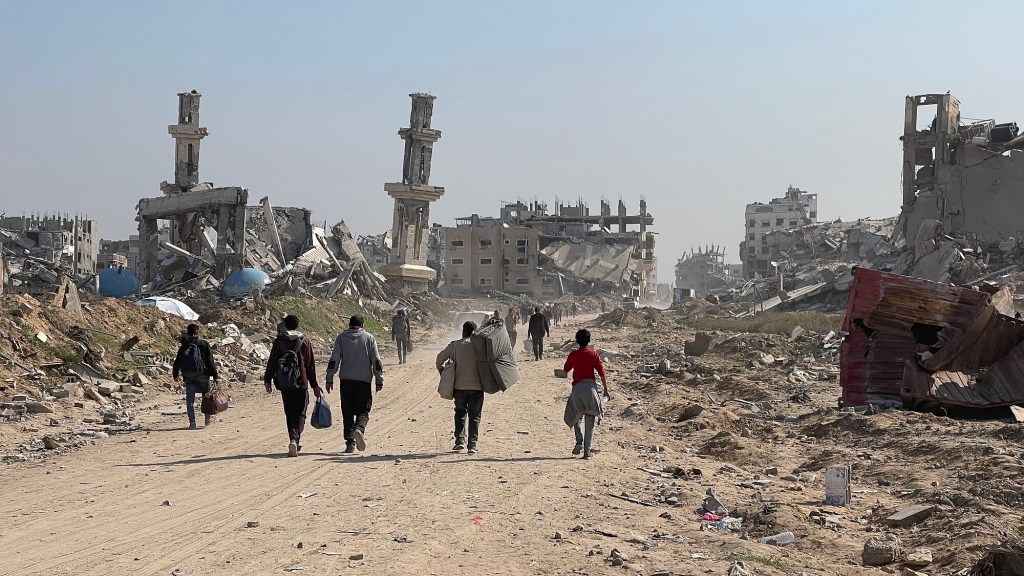
In this critical moment of twenty months of unfolding genocide in Gaza and intensified debates within German academic and cultural institutions over the boundaries of political expression, academic freedom, and institutional culpability, we spoke with the Israeli historian Ilan Pappé. Pappé’s work has long unsettled official narratives and broken silences around the foundational injustices of Zionism and the Nakba. A professor at the University of Exeter and director of the European Centre for Palestine Studies, Pappé’s scholarship, including The Ethnic Cleansing of Palestine (2006) and Ten Myths About Israel (2017), has offered powerful historical evidence of systematic displacement and violence. But his work is not only historical—it is deeply implicated in the political present. Pappé’s insistence on confronting the structural logic of settler colonialism has made him a central voice in understanding the continuity between 1948 and the present-day assaults on Gaza.
In this interview, which took place on May 29th, 2025 in Berlin, we reflected on the academic responsibilities of institutions in Germany regarding knowledge production on Palestine, and the role that international legal frameworks and human rights concerns might play in shaping academic partnerships, particularly with Israeli institutions. We also explored how academic institutions are responding to shifts in public discourse, the challenges posed by institutional silence, and the role of scholars committed to critical engagement and solidarity. In discussing how students across Germany have mobilized in solidarity with Palestine—facing police repression, university crackdowns, and media distortions—we noted that the need to shift the terms of public debate has become more urgent than ever. While recently some changes in opinion are slowly unfolding within German political and institutional realms, it often feels not only too little too late, but deeply cynical. We spoke with Ilan Pappé to explore the political stakes of memory, solidarity, co-resistance, and the future of a decolonial horizon. This is a moment of rupture. It is also a moment to listen, to learn, and to act.
This interview has been lightly edited for readability.
Association of Palestinian and Jewish Academics (PJA): For many years, and increasingly since October 7, 2023, German liberal institutions have responded to Palestine solidarity with repression and censorship. In this current climate and long before, the idea of Palestine studies in Germany has been and still is unimaginable. How would you define the academic responsibility of German institutions for fostering critical scholarship and knowledge production in and about Palestine? And what role should Israeli violations of human rights and international law play in choosing to reject partnerships with Israeli institutions in this context?
Ilan Pappé (IP): Let me start with the first part of the question. Certain sections of our society, such as journalists and academics, have a professional duty and time and space to examine reality in a more profound way, in a wider context, than the political elite. I think that we expect such people to provide a critical assessment and an honest evaluation of issues that pertain to justice, morality, and so on. We also expect academics in particular to be proud of their professionalism. When they bring professional knowledge to the fore, that challenges politics from above. This can happen quite often, whether it’s policies on global warming or poverty or issues of transport.
You would expect their professional integrity, and I would even say pride, would lead academics to insist on their right to express their opinions, especially when their opinion is based on knowledge and research, and of course to pass this knowledge over to their students. It is clear to me that many academics in Germany don’t apply the same principles of integrity, morality, and professionalism to the case of Palestine as they would to many other cases. Even academics who are very articulate and informative on many historical and contemporary issues seem to forget their professional duties when they speak about Palestine. That’s a very dismal reality, and it means that we need, both in Germany and in other places, to rethink the academic role and mission given the display of such moral cowardice and lack of professionalism. I suppose it has something to do with the fact that, in Germany and elsewhere, the university has become two different things. It is a business with its own management on one hand, and a community of scholars on the other. When the management and business side also determines what the community of scholars is doing, then we are in trouble. In this particular case of Israel and Palestine, we are witnessing not only a lack of scholarly courage, but also of university policies.
Regarding the second part of your question, I do think that academics in Europe in particular should realize, first of all, the complicity of Israeli academia in criminal policies against the Palestinians. But they should also regard their connections with Israeli academics as a dialogue and not as a means of punishment. For instance, the issue of boycott is a tough conversation to have with them. But it’s an important conversation to have. Israeli academic institutions need to become aware that whether they are directly involved in the oppression of Palestinians or simply silent, there is a price tag attached to it.
One can understand the worries about academic freedom and so on, but I think it actually enhances academic freedom when you don’t allow academics as individuals or academic institutions to be complicit in crimes against humanity, or war crimes, or any kind of criminal policy. I hope that we are talking about a change in German academia, not only in the way Palestine is taught and researched, but also by showing solidarity with the Palestinians in their struggle for freedom and liberation.
PJA: We’ve recently been seeing a shift in public discourse regarding the genocide in Gaza, both in Germany and in different countries. More prominent voices who have so far been silent and even supportive of Israeli crimes are finally speaking up. While many of these positions seem performative, we need to acknowledge that it’s a moment we can build on. How can we, as academics in solidarity with Palestine, intervene in and capitalize on this moment?
IP: Well, I think the change in the discourse is an opening. It’s a slight change, but it’s an important one, and we have all noticed it. Even Israelis are noticing it, to their great surprise. They’re not used to hearing from German politicians what they have heard in the last two weeks. We have to wait and see how fundamental the change is. As you say, it’s mostly performative, but still, I agree.
Maybe the fact that the politicians are changing their discourse could make academics a bit more courageous in expressing themselves on Palestine. But to be honest, I think that this goes beyond the government’s position on Palestine and their position on Palestine. It’s a question of whether the government has the right to tell academics in what context they should study and research Palestine. I’m very surprised that so many German academics pride themselves on “decolonizing knowledge,” and there are so many programs and centers of decolonial studies, yet they don’t include Palestine. They should insist on including Palestine, and I don’t see how the government can stop it. I can see how the government would say, we will try not to allow the academics to have a political rally in the university, or not to be involved directly with even political movements or demonstrations. But it’s another thing for the government to say “we will decide for you what decolonizing knowledge means”. I mean, it’s ridiculous. But it’s not only a German problem. We are beginning to see very positive developments in the United States and in Britain in this respect. But most European countries on the continent are lagging behind Britain and the United States. For example, there are eight centers for Palestine studies in the world. Not one of them is in Europe, which is quite indicative. We have three in Britain, we have another three in the United States, and two in South America and one in Malaysia. This has to fundamentally change.
PJA: What risks do academic institutions face in maintaining their silence and neutrality? And is it too late for them?
IP: Many academics are starting to get scared. So what do you say to them? I call it moral panic, when you have academics who see themselves as progressive people, who have a moral constitution, who have a very strong value system that supports freedoms, liberties, and opposes oppression. For example, they will talk very clearly about Ukraine or North Korea or anywhere else in the world where they detect oppression and injustice. But that doesn’t cost them anything. On the contrary, that’s very easy. Moral panic arrives when suddenly there’s a price to be paid for your moral values. I think they understand rightly that there is a price. If you express yourself on Palestine in a genuine way, which I think they would like to do, or are afraid to do, then you might be punished in the current atmosphere. Suspended, criticized, God knows. So here is the question. Do academics have to display moral courage or is that not part of the job? If not, what do we need universities for? The question goes beyond Gaza. It’s a question of reassessing the role of academia in our society.
Of course, we have to be practical and tactical. I don’t think that people in vulnerable positions in universities should lead the way. But we should expect people with more secure positions to lead the way. They have less to lose and can do it more safely than others. And of course, one should never do this work alone. There has to be a national association for this, or an international one to immunize academic work.
PJA: German discourse has been celebrating a recent letter signed by 1,200 scholars at Israeli universities calling for an end to the “Israel war in Gaza.”. How do you situate this letter? What brought about this awakening after many months of genocide?
IP: October 7 was a real trauma, a national trauma, for Israeli society. It takes time to recover from a trauma. Some of their reactions have to do with what they saw or were told happened on October 7. But the question is not why they didn’t react after a month, the question is why didn’t they react after seven or eight months of genocide. I suspect that much depends on the way the international community reacts. Sometimes these Israeli academics need moral guidance from the outside. This letter, aside from being too late, is not a positive or remarkable sign of Israeli democracy or the ability of Israelis to criticize their government. It just indicates one important thing: international pressure, even only from civil society, works.
I remember having arguments with a lot of people, including Noam Chomsky, about an academic boycott. They told me that an academic boycott would undermine the ability of Israeli academics to criticize Israel. In fact, the opposite happened.When the academic boycott started, more Israeli academics supported it than before. They felt that this is something that comes from people who cannot be accused of anti-Semitism, people who used to be supporters of Israel. That’s the main point I would take from this letter. Unfortunately, it’s not a fundamental change in the Israeli Jewish society, but rather shows the benefit or the positive impact which outside pressure has on Israeli society.
PJA: Often, it is the most vulnerable within academia who stand up to injustice. One of the biggest accomplishments in German since the onset of the genocide in Gaza is the remarkable organization of student protests against the genocide and academic complicity of German institutions. This has been met with very heightened repression. As a historian, what do you think we can learn about and from this, both in Germany and internationally? What are the historic parallels with student movements, particularly in the 1960s and 70s, and what could academic solidarity with students look like?
IP: I think there are two historical aspects here. One has to do with the real motives behind the repression of such activities. They appear at first to be directly connected to protecting Israel, or not allowing criticism of Israel, but I don’t think that’s the real motive. I think the real motive is anti-democratic. There are sections in any democracy, usually located in the government, in the army, in the security service, in the police, who are looking for a pretext to curb our freedoms. The same happened after 9-11. The reason that people were not allowed to speak freely after 9-11 was not because of 9-11. It was because those who don’t like freedom of speech use 9-11 to claim that now it’s an emergency issue, it’s a matter of national defense, national security. All these very vague terms don’t mean very much, but are very effective in allowing police, government, and the legal system to act in an exceptional way against our basic freedoms.
That’s one thing that we learned about the repression of students. As for the student movement itself, you rightly connected to the student movements in Europe in the 1960s, and of course in the United States as well, that led the way in the anti-Vietnam War protest movement, and much of the civil rights movement in the United States. I think that teaches us that academics are too easily integrated into what I call the business side of the university, or the management side of the university. Even as the university becomes more and more of a corporation, and less and less of a community of scholars, students are not yet corrupted by this process. They really believe they’ve come to a space where such freedom of expression would be respected and protected, and that’s why they go so far. They are very surprised, I think, not only by the police action, but by the fact that the universities are not accepting their right to protest. So again, I think it comes back to this idea that many academics analyze everyone except themselves. It’s time for them to rethink who they are and their role in the 21st century. This is part of solidarity.
PJA: What do you think academic solidarity could actually look like under these conditions?
IP: One side of academic solidarity is working with the students and being part of the overall solidarity movement. But I think we’re always missing out on long-term solidarity. Solidarity usually focuses on very short-term and general objectives, quite understandably. But academics need to consider long-term solidarity. Long-term solidarity invites us to consider how we teach Palestine as an academic topic, and in what contexts.
This question relates not only to Palestine, of course, but to other issues related to freedom of expression. Long-term solidarity and its results will not unfold tomorrow or the day after tomorrow, but will have a lasting impact in the future. We can see it in some of the successes of changing social attitudes towards women, minorities, workers, and so on. Academia was willing to internalize these changes. In the future, they have impacted school curriculums, journalism, and even the discourse of the politicians. This kind of long-term solidarity is very important.
PJA: As the Association of Palestinian Jewish Academics (PJA), we have aimed to foster a mode of solidarity and co-resistance that centers Palestinian rights and counters the instrumentalization of “anti-anti-Semitism” in Germany. From your experience, how can such efforts fall into the trap of normalization and how can that be avoided?
IP: Even before the 7th of October, Israeli Jews were not allowed to speak at Birzeit University due to its anti-normalization policy. One can fully understand where that policy comes from, especially because normalization was weaponized, and still is weaponized, both in the Arab world and elsewhere, against the Palestinian national movement.
I know the challenges faced by Israeli Jews opposing and working against the occupation even before October 7th. Many people don’t currently have the impulse or the incentive to work with Israeli Jews. One can understand this attitude in light of the genocide. But I think the context should be different outside of Palestine, for several reasons. Firstly, I think that we need to take back the definition of Judaism from the Zionist project. Once you de-Zionize the whole idea of Judaism, what does it mean to be Jewish? We need to reclaim Judaism as a faith that motivated people to spearhead the movement against apartheid in South Africa, against apartheid in the southern United States, against the Vietnam imperialist adventure, and so on. So there is a reasonable expectation that Jews could actually be an important part of the Palestine Solidarity Movement, as they have been part of solidarity movements in other contexts. That kind of co-resistance, as you rightly call it, cannot be defined as normalization. It’s actually an antidote to the manipulation of normalization in order to silence the Palestinian struggle for freedom.
The second point is understandably not urgent for the Palestinian National Movement right now, but relates to an issue they will not be able to avoid. Hopefully, unlike in the so-called peace process until now, Palestinian will actively lead the conversation about the future of Palestine, not merely react to ideas of “peace” coming from Israel and America. Once Palestinians do lead the way, they will eventually have to ask themselves how they see the future of the 8 million Jews who live today in Israel. You hear some understandably very angry voices who say that, as far as they are concerned, none of them will remain in Palestine. They will all be, I don’t know, shipped back to wherever they came from. This is not realistic and will never happen. But between that and what we have today, there’s a whole spectrum of imaginative ideas about what it would mean to be a Jew in a post-Israel Palestine, in a decolonized Palestine.
We have fantastic models for the future from the past, when Muslims, Christians, and Jews co-existed, genuinely co-existed, in the region. I know you interviewed Ussama Makdisi regarding his latest book, which is a great testimony to such a heritage that could be reignited. Today, the genocide is the most important topic. But I believe that co-resistance and solidarity between Jews and Palestinians will be very important and an organic part of the future. It also impacts the position of Jews who came from Arab countries, Arab Jews. It is related to the idea of Judaism as being an identity, if you want, a group identity, which is not different from other group identities in the Eastern Mediterranean. Yazidis, Jews, otherwise, it doesn’t matter. The mosaic that used to exist in the region can be reconstructed, and it can allow for a collective Jewish identity, but not a nationalist one, and definitely not as a Zionist one.
PJA: Considering everything that has happened in the past two years: the onset of the genocide, the undermining of international law, the rise of fascism, etc., many of us find it difficult to have hope. How do you see this, and what is your outlook for the future?
IP: The Palestinians in general, and the Palestinians in Gaza in particular, don’t have the luxury of us losing hope. They don’t have the power to prevent the ongoing ethnic cleansing and dispossession. They need us. They really need us. So if we lose hope, it’s not fair towards them. I can understand someone being desperate in Gaza right now. I cannot afford to be desperate because of what’s happening in Gaza. So I think we need to be hopeful and believe in our power to change things. In Germany, I have been troubled to hear so many young people share their despair with me. I think that energy should be diverted from despair to constantly asking if we are doing enough. Are we thinking out of the box? Can we do more? What are we not doing right? I think that’s where the energy should go. It’s very easy to sink into despair. It’s much more difficult to be involved in fighting despair and believing that you have the ability to do something. I fully understand that it is very difficult, but I have been involved in this struggle for 45 years. Some of these struggles need patience and take time. But of course, when you see the genocide, you say that we don’t have time.
We need to strategize and believe in long-term processes, while doing our utmost to stop what’s happening right now and tomorrow, which is not very hopeful, I agree. The balance of power is such that it’s so difficult to see how you stop it. Definitely, we are not the ones who are going to stop it. We hope that we will push someone else who can stop it to do so. Maybe they will do it not only because of us, but because of their own egotistic interests. It doesn’t matter, we don’t care as long as they stop it. But it doesn’t end with the end of the genocide in Gaza. That genocide can lead to another genocide, can lead to another ethnic cleansing. For that we need to strategize. I think there are hopeful processes, whether it’s Israel’s isolation, whether it’s the huge support for Palestine that never existed before, never in the history of modern Palestine. Millions of people in the world know where Palestine is, care about Palestine and are willing to act on behalf of Palestine. This hasn’t happened before. So that’s very hopeful. And as we discussed before, the fact that so many Jews are part of this effort is very encouraging. I also think about the negative economic situation in Israel, the constant failure of the Israeli military to perform the way the politicians wanted it to perform, and our hope that the revolutions in the Arab world are not over. All these are long historical processes that will create much better circumstances, conditions, to move forward into a much better future.
PJA: Thank you.
 Association of Palestinian and Jewish Academics